Back
Case Study
How Odessa Cut 2 Minutes Off Their Response Time with Darkhorse Response
Odessa Fire Rescue used Darkhorse Response to pinpoint dispatch bottlenecks, redesign their protocol, and achieve measurable, life-saving improvements — without building a single new station.
2 min
Reduced call handling time
1:40
90th percentile call handling
97
Estimated lives saved annually
CHALLENGE
Dispatch Delays Adding Precious Minutes
Complex dispatch protocols with 1,500+ call types created 3+ minute delays before units could be dispatched, adding unnecessary time to total response performance.
SOLUTION
Data-Driven Protocol Redesign
Used response data to pinpoint root causes of dispatch delays
Identified opportunities to streamline dispatch protocol
Tracked real-time impact of process changes on call handling times
Used visualizations to communicate improvements to stakeholders
01 / Working The Data
Pinpointing Where Time Was Being Lost
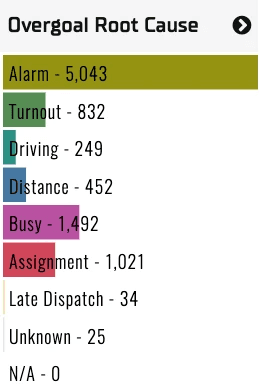
OFR used the Diagnostics tool in Darkhorse Response to pinpoint and visualize where time was being lost in the process. The data clearly showed that the bottleneck occurred during call processing — specifically the lengthy ProQA questioning phase before any units were dispatched.
This evidence gave OFR’s command staff the confidence to redesign their dispatch protocol entirely.
02 / Simplifying The System
From 1,500 Call Types to 5 Simple Codes
Rather than navigating 1,500 call types, OFR condensed their initial dispatch to just five simple codes that any call-taker could quickly identify. As soon as the call-taker determines whether the need is medical, they immediately dispatch using one of these five codes.
The complete ProQA questioning happens while units are already responding, with detailed information sent to crews’ mobile devices en route.
01
Hot engine & ambulance
02
Hot ambulance only
03
Cold ambulance only
04
Full response w/ battalion chief
05
Motor Vehicle Collision response
“We want the same information captured, we just moved the window from when it’s captured. The 60 to 300 seconds en route can be spent gathering blood pressure, blood sugar, medical history. We don’t need to know that when we’re running to the truck. We need to know that before we walk in the house.”
03 / Real-Time Validation & Momentum
Tracking Improvement as It Happened
Darkhorse tracked the improvement in real-time, showing both 50th and 90th percentile performance increases. This allowed OFR to demonstrate progress to their dispatch center and management, using encouragement rather than criticism to drive continued improvement.
The data also revealed that outliers in the last 10% — language barriers, hysterical callers — still drag the average up, helping OFR identify where additional targeted improvements could be made.
“Seconds matter. 120 of them definitely help. There’s going to be more people alive and houses standing up because of that. This was all made understandable and initiated by our partnership with Darkhorse.”
Two minutes faster.
Potentially more lives saved.
The improvement was immediate and measurable.
2 min
Cut from call handling time, bringing the 90th percentile down to 1:40 — approaching NFPA’s 1-minute standard.
97
Estimated deaths prevented annually across overdose poisonings, hemorrhagic lacerations, strokes, traumatic injuries, and cardiac arrests.
The Darkhorse Way
Protocol Redesign
20% performance improvement through smarter dispatch
vs
The Traditional Way
10+ New Stations
$100M+ capital investment for equivalent gains
Reduced call handling time by 2 minutes through evidence-based protocol redesign
Achieved 1:40 call handling at 90th percentile, approaching NFPA’s 1-minute standard
Used real-time data to build confidence and buy-in from dispatch center and leadership
Identified remaining opportunities through percentile analysis showing outlier patterns
Established data-driven decision making culture that continues to drive improvements
“The number I was most impressed by was the 50th percentile. And that showed the change even more drastically in my mind. So it really showed that the outliers that we have in that last 10% are really dragging our time up.”
Looking Ahead
Expanding the Platform’s Impact
OFR continues to use the Darkhorse Response platform daily for operational insights. Based on the success of the Response module, they’ve also signed up for the Risk module, enabling them to map risk across the community in a living CRA.
Station Location Optimization
Using Deployment for future OFR growth planning
Unit Capability Analysis
Enhanced response planning across the fleet
First Arriving Integration
Station displays and public transparency tools
NFPA 1-Minute Standard
Ongoing monitoring toward the benchmark